
Orísà
The Inner Sovereignty
Opening Reflections
In this piece, the spelling Orísà (reh meh doh) is used rather than the more familiar Òrìṣà (doh doh doh). The two sound alike, yet over time they have come to carry different shades of meaning. Òrìṣà, as many people encounter it today, often reflects the outer, inherited image shaped by diaspora retellings and global imagination. It is usually presented as a pantheon of divine figures.
Orísà, as used here, signals something deeper: not personalities in the sky, but the living principles and intelligences through which Àṣẹ shapes consciousness, balance, wisdom, justice, love, and transformation. It is less mythology and more metaphysics. Less about beings above us, more about the divine pattern already woven within us.
Both spellings matter. This is simply an invitation to walk through the doorway that Orísà opens, one that leads inward, toward dignity, clarity, and the sovereignty carried by every human Orí.
Orísà is not a distant god. It is the shape your own divinity takes when your Orí begins to remember itself.
There is a quiet truth Yoruba civilization held with confidence long before the world began arguing about what is sacred and what is not. It is the truth that what many people call Òrìṣà today is not always the same reality that Yoruba consciousness refers to as Orísà. One belongs to the world’s vocabulary of gods; the other belongs to the Yoruba understanding of consciousness. The difference is subtle, but important.
And this distinction matters because the human being does not arrive in this world stained, fallen, or unworthy. We arrive bearing Àṣẹ, carrying Orí, infused with the breath of Olodumare. Every child arrives with a seed of brilliance, not a shadow of guilt.
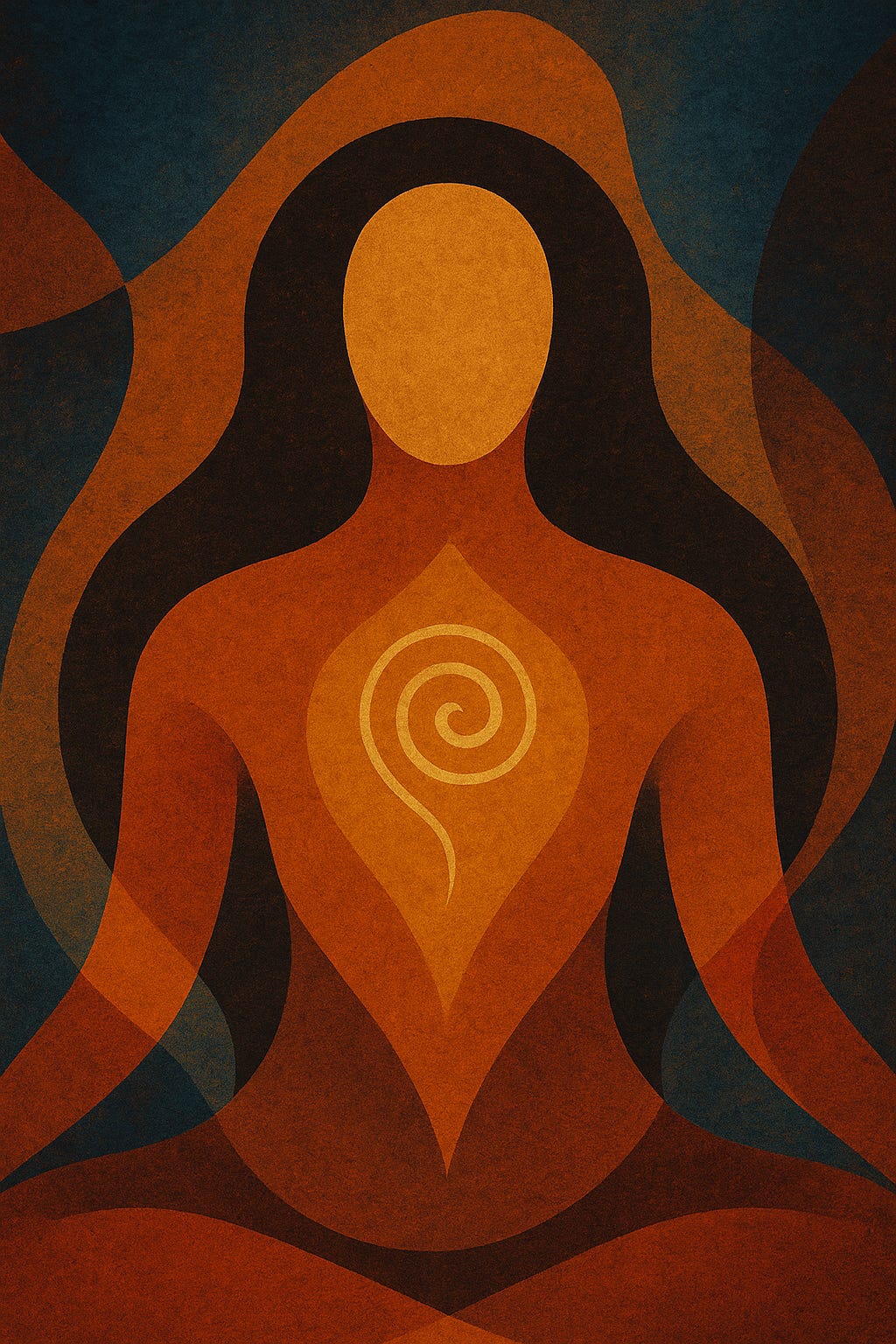
To understand Orísà is to recover something simple yet profound. It is to remember that the sacred is not far away. It is not locked in temples or hidden in mountains. It is as close as your consciousness. It is the design woven into your destiny. It is the quiet geometry of your existence.
The word Orísà is often read as Orí plus Ṣà: the inner head combined with the act of shaping or configuring. Orí as the seat of awareness. Ṣà as the marking that gives form. Whether or not this is the original linguistic root, it captures a truth about Yoruba thought: Orísà points to the many ways divine intelligence takes shape in the world. Not above humanity, but throughout creation. This is quite different from the way Òrìṣà is sometimes presented as a pantheon of beings separate from us. In Yoruba consciousness, Orísà describes the flow of Àṣẹ into form, the principle rather than the personality.
This is why Yoruba cosmology does not imagine a child arriving with inherited guilt. Instead, it imagines a soul choosing its destiny with Olodumare and then entering the world with honour and possibility. In this view, the human journey is not about escaping an ancient stain but about unfolding the potential already planted within.
This understanding does not condemn any other worldview. It simply reflects how the Yoruba saw the world. A life is not a punishment. It is a path.
In this universe, to be human is to be a walking expression of Àṣẹ. To be human is to carry a spark of the same creative intelligence that shapes the cosmos. To be human is to participate in the unfolding of divine purpose. The Òrìsà are not distant beings demanding submission. They are the living principles through which the universe organises its movement. And the same power that animates them is the same substance that animates your Orí.
This alone restores a sense of sovereignty.
Obatala reflects clarity, balance, and presence. Oshun reflects harmony, intuition, and the sweetness of connection. Sango reflects justice, courage, and transformation. Oya reflects transition, breath, and movement. Ogun reflects innovation and the courage to open new paths. Orunmila reflects wisdom woven into the fabric of reality.
These are not characters meant to compete with one another. They are expressions of divine order. They are archetypes. They are principles. And human beings share the same spiritual DNA. When your Orí aligns with destiny, you do not imitate these principles. You embody them.
This is why Yoruba tradition speaks openly about humans rising into the state of Òrìsà. Sango was once a king. Moremi was once a mother. Ogun walked the earth. Their lives became so aligned with wisdom, courage, justice, or sacrifice that they came to represent those forces permanently. Not because they stopped being human, but because they fulfilled the highest possibilities of being human.
This is not a claim of superiority. It is an affirmation of potential.
Yoruba thought insists that human nature is capable of depth, clarity, courage, and goodness. The challenge of life is not to outrun a curse, but to develop Ìwà, the character that allows your Orí to shine without distortion.
When people grow up believing they are fundamentally unworthy, they often shrink or turn inward. But when people grow up believing they carry a spark of something sacred, they rise. They take responsibility. They act with intention. They cultivate courage. They honour their path. They reclaim their sovereignty.
This is why returning to Orísà consciousness is not a return to idol worship. It is a return to dignity. It is a return to the understanding that the sacred is not somewhere else. It is the intelligence breathing through your decisions, your relationships, your insights, your becoming. It is the reminder that you are not a beggar before the divine. You are a bearer of Àṣẹ learning to use your power wisely.
And this is the quiet unveiling. Orísà is not simply a name for divine principles. It is a reminder that divinity is patterned into human life. It is a reminder that you are not separate from the sacred. You are one of its many expressions. When your Orí aligns with your purpose, the line between human and divine becomes thinner and thinner until it no longer exists at all.
To embrace this understanding is to reclaim the sense of sovereignty that Yoruba civilization always held. It is to step away from ideas that make you feel small. It is to step into a worldview that honours your inner power. You were not born in sin. You were born in Àṣẹ. You were not conceived in guilt. You were conceived in purpose.
And when you remember this, something deep within you stands up straight.
You walk with your head high because your Orí remembers where it came from.
You walk with clarity because you understand what you carry.
You walk with dignity because you finally recognise what you are becoming.
And in that remembrance, sovereignty returns.