
Kénimánì
On the Monopoly of Goodness
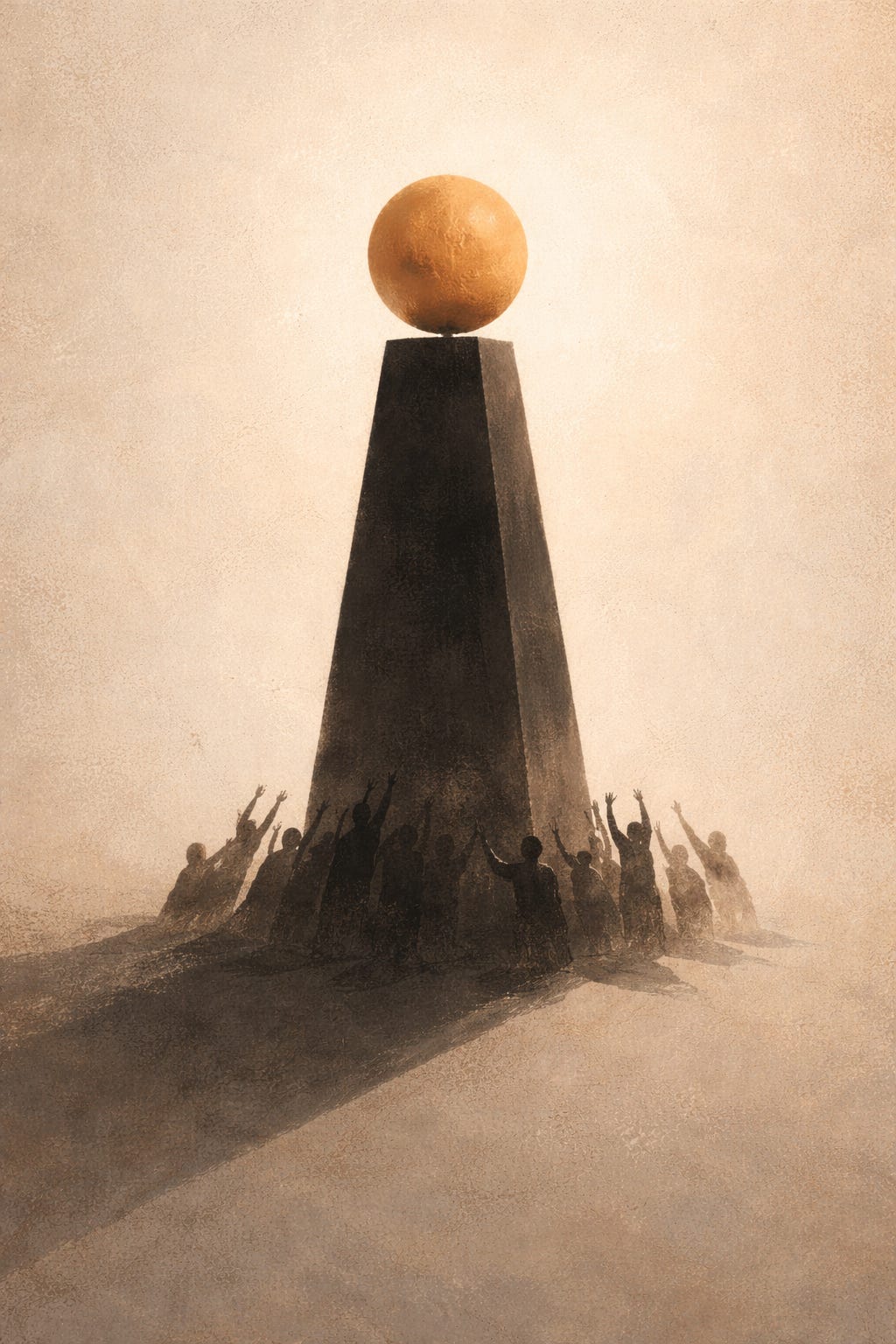
Some people move through life as though goodness were a scarce resource, reserved for themselves and their children alone. They watch as others rise, not with curiosity or joy, but with suspicion and quiet obstruction. This is the posture Yoruba thought calls Kénimánì; a diabolical penchant for wanting to arrogate goodness exclusively to one’s quarters.
This subtle but powerful disposition among human beings is the belief that goodness is a private inheritance. It is the quiet conviction that fortune, opportunity, and favour should circulate only within oneself and one’s immediate lineage.
Kénimánì is more than selfishness. It is a worldview. It is the inner posture that insists that goodness should belong to oneself alone. It is the desire to monopolise blessings, to control access, and to limit the circulation of fortune as though it were fragile and finite.
At its root, Kénimánì emerges from fear. It assumes that if another person receives, one must inevitably lose. From this fear grow behaviours that hoard opportunities, restrict access, and ration support. Sometimes it appears as caution or loyalty, yet beneath it lies a constriction of the spirit.
A person shaped by Kénimánì may appear successful. They may have wealth, influence, or recognition. Yet within Yoruba thought, accumulation without circulation signals imbalance. Life itself moves in cycles of giving and receiving, of release and renewal. When the flow of goodness is blocked, harmony weakens both within the individual and the wider community.
Yoruba ethics consistently returns to one central measure of human worth: Ìwà. Ìwà represents character, but also alignment with truth and balance. An Omolúàbí, the embodiment of noble character, understands that personal elevation is incomplete without communal uplift. The dignity of existence is measured not by what one possesses alone, but by what one allows to pass through one’s hands into the lives of others.
Kénimánì stands as the shadow of Omolúàbí. Where Omolúàbí expands, Kénimánì contracts. Where Omolúàbí distributes honour, Kénimánì centralises advantage. Where Omolúàbí sees prosperity as a shared harvest, Kénimánì sees prosperity as a fenced inheritance. Greatness carries fragrance; a life that benefits only its immediate container rarely achieves lasting reverence in communal memory.
One of the most profound Yoruba teachings distinguishes biological kinship from ethical kinship. The saying Àjùmòbí ò kan t’àánú. Àbínibí ni dani reminds us that sharing blood does not guarantee benevolence. Shared humanity often forms the deeper foundation of genuine care. Kénimánì defies this wisdom. It insists that blessings are owed only to a select few, leaving others to navigate scarcity or suspicion.
The consequences of such exclusivity are often visible. Projects, ambitions, and personal triumphs become sources of scrutiny instead of celebration. Sometimes those who witness your success want you to eat, but they do not want you to be satisfied. They measure your joy against their envy, hoping to limit the fullness of your life to the scraps they can tolerate. Words carry force. In Yoruba reflection, persistent negative intention can shape atmosphere, confidence, and even opportunity.
Yoruba cosmology reflects patterns of circulation. Rivers do not drink their own waters. Trees do not consume their own fruits. The sun does not shine for a single household. Existence models generosity as a principle of survival. Within Ifá philosophy, blessings are energies that seek movement. What is hoarded stagnates. What is shared renews itself. Kénimánì, therefore, is not merely a moral flaw; it is a disruption of natural and spiritual order.
Living in alignment with this order does not mean reckless generosity or abandoning responsibility toward one’s immediate family. Protection is necessary, but it must not evolve into exclusion. Loyalty must not suffocate compassion for the wider human family. Goodness is multiplied through participation. True security emerges not from hoarding but from cultivating networks of mutual uplift.
Communal memory honours those who allow goodness to flow beyond themselves. Kings are remembered for the prosperity of their people. Elders are revered for the knowledge they transmit. Families are celebrated for the generosity they extend. Legacy is measured not by possession but by distribution.
Kénimánì ultimately represents spiritual isolation disguised as success. It builds walls that protect resources but separate the spirit from the warmth of community. It creates temporary advantage but weakens the deeper networks that sustain dignity across generations.
In a world increasingly shaped by competition and scarcity narratives, Kénimánì is both a warning and a mirror. It asks each person to examine the boundaries they draw around their blessings. It asks whether those boundaries serve survival, or whether they diminish collective flourishing.
The highest form of prosperity is not the ability to accumulate goodness, but the capacity to become a channel through which goodness lives, moves, and multiplies long after one’s personal story has ended. Witnessing Kénimánì in action, even within families, sharpens this understanding. It is a lesson in character, flow, and the courage to let goodness circulate freely, beyond fear, beyond entitlement, beyond self.
Ire o 🌴